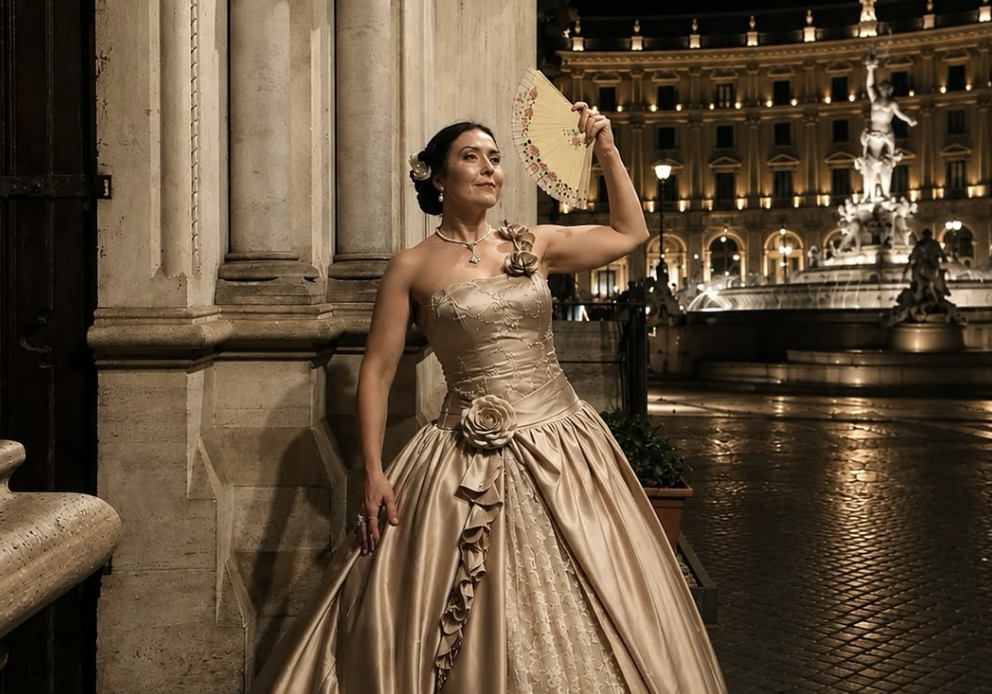
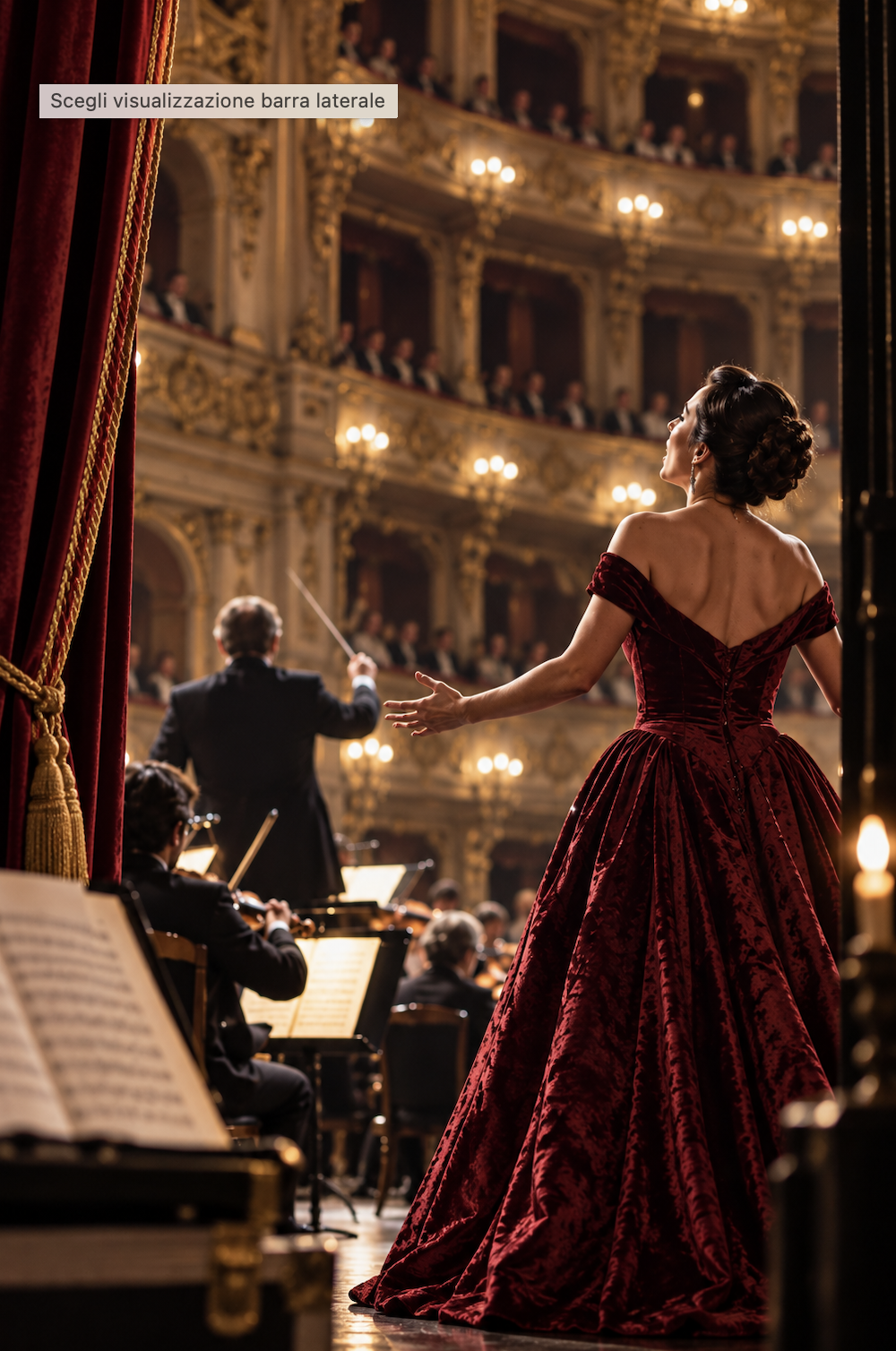
A voice powerful enough to carry over an orchestra and reach the back of the hall without amplification. It isn’t magic — it’s technique, acoustics and years of training.
Why Don’t Opera Singers Use Microphones?
If you have ever attended an opera or a classical vocal concert for the first time, you may have found yourself wondering: where is the microphone? In most cases, the answer is surprisingly simple: there isn’t one. The voice filling the hall is the singer’s natural voice, without amplification. And this is one of the most remarkable things about experiencing opera live.
How can one voice fill an entire theatre?
An opera singer does not simply learn to sing “louder”. Instead, singers learn to use their entire body as a musical instrument. Breath, support, posture and resonance work together to produce a sound capable of travelling through a large space with power and clarity, without the need for amplification.
Would you like to hear an operatic voice live?
Experience the power of the natural operatic voice in the remarkable acoustics of St. Paul’s Within the Walls, in the heart of Rome.
Every week, Opera e Lirica presents live opera and classical music performances featuring opera singers and musicians.
Discover our concerts at St. Paul’s Within the Walls →
It takes years of training. Opera singers learn to control their breath, use the natural resonating spaces of the body and project their voices so that the sound can reach even the audience members sitting far from the stage.
But how can a singer be heard over an orchestra?
This is perhaps the most surprising part. An orchestra can produce an enormous amount of sound, yet a trained operatic voice can still be heard above the instruments. It is not simply a question of volume. The operatic voice produces a particular concentration of acoustic energy in frequencies to which the human ear is especially sensitive. This helps the voice remain clear even when an entire orchestra is playing. Composers, of course, understood the possibilities of the human voice extremely well. Orchestration, vocal writing and the balance between singers and instruments are all part of a carefully constructed musical dialogue.
Acoustics are part of the performance
Not every venue sounds the same. Theatres, churches, palaces and historic halls all have different acoustic characteristics, and the way sound travels through a space can completely transform the experience of a concert.
That is why, when classical music is performed in a space with beautiful natural acoustics, the venue is not simply the backdrop to the concert: it becomes part of the music.
You can hear the difference live
A recording can be extraordinary. Headphones can allow us to hear every tiny detail. But something completely different happens when you hear an operatic voice in the same room as the singer: the sound begins in the artist’s body, travels through the space and reaches the audience directly. There is no loudspeaker between the singer and the listener. You can experience the power of the voice, its vibrations, its colours and even the way it changes depending on where you are sitting. It is a sensation that is very difficult to reproduce through a recording.
Do opera singers ever use microphones?
Yes, sometimes. Amplification may be used for very large outdoor concerts, unusual venues or productions that combine classical music with pop and other genres. But in traditional opera and classical vocal concerts, particularly in theatres and venues with suitable acoustics, the natural voice remains at the heart of the experience.
Next time, listen differently
The next time you attend an opera concert, forget the melody for a moment and simply watch the singer. Think about the fact that the voice you are hearing is actually travelling across the room without amplification. Behind something that can sound so effortless are technique, control, training and years of study. This is also why hearing an operatic voice live can be far more surprising than many first-time listeners expect. At Opera e Lirica concerts, our singers’ voices resonate naturally through historic venues, without microphones or amplification, allowing the voice, the music and the acoustics of the space to create the experience.