Torna a Surriento: The Song That Made Sorrento Eternal
A song of love, beauty and longing that has carried the name of Sorrento around the world for more than a century.
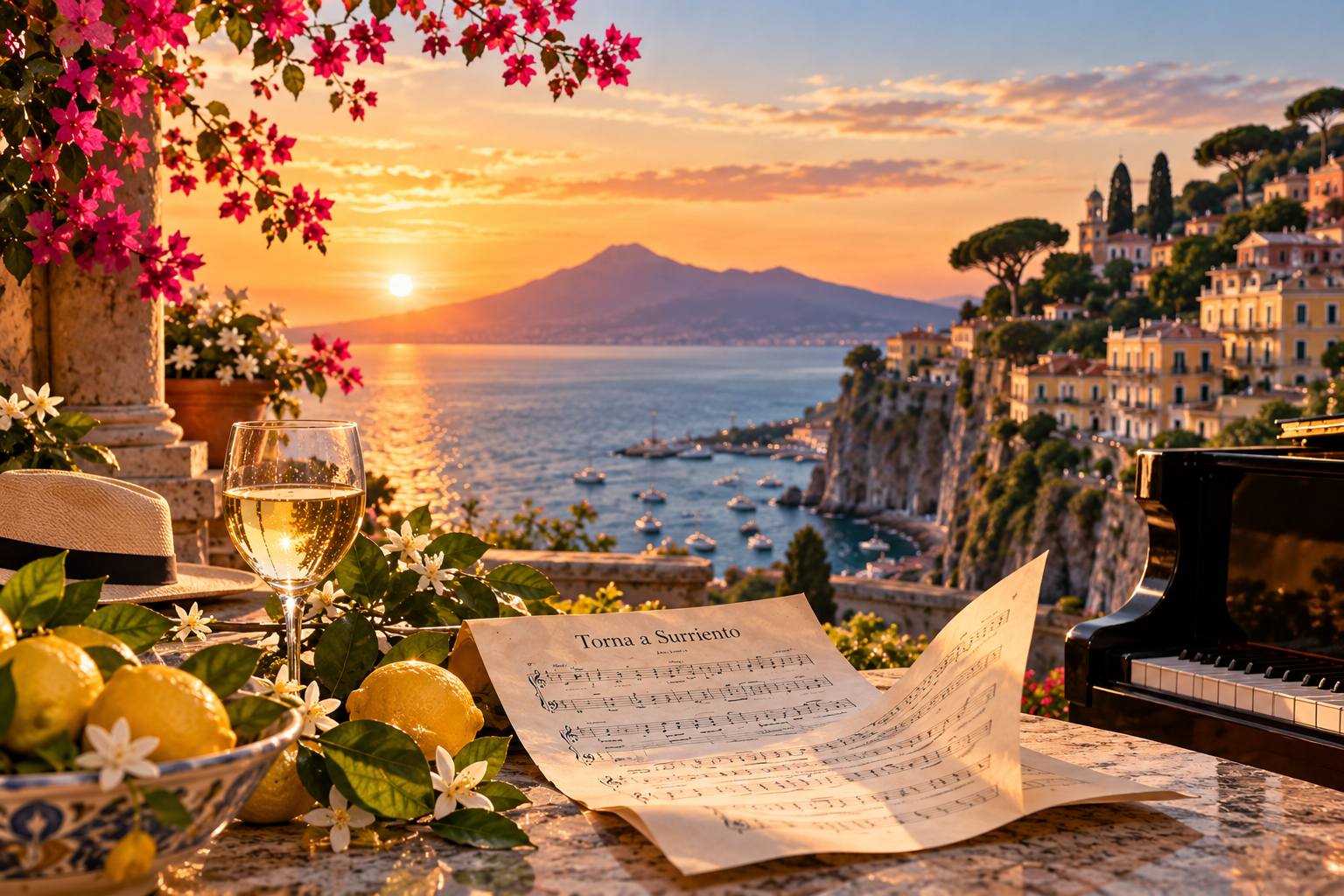
There are songs that belong to a place, and then there are songs that become part of that place forever. Torna a Surriento is one of them. Its melody has travelled far beyond the Bay of Naples, sung by some of the greatest voices of the 20th century and heard by audiences all over the world. Yet every time its opening notes return, they seem to lead us back to the same place: Sorrento, the sea, the scent of orange blossoms and the feeling of not wanting to leave.
A Song Born in Sorrento
Torna a Surriento was written by two brothers: poet and painter Giambattista De Curtis, who wrote the lyrics, and composer Ernesto De Curtis, who created the music. The song dates back to the beginning of the 20th century and is traditionally associated with a visit to Sorrento by Italian Prime Minister Giuseppe Zanardelli in 1902.
According to the story, the mayor of Sorrento, Guglielmo Tramontano, asked Giambattista De Curtis to write something in honour of Zanardelli, who was staying at the Imperial Hotel Tramontano. What emerged would become far more than a song written for an important visitor. It became one of the great symbols of Sorrento itself.
What Does “Torna a Surriento” Mean?
The title simply means “Come Back to Sorrento.” But the song is more than an invitation to return. It is a plea not to leave.
The lyrics speak of the beauty of the sea, the scent of orange trees, the garden, the sirens and a land filled with love. Everything becomes part of the argument: how can you possibly see all this beauty and still have the heart to go away?
At its heart, Torna a Surriento is about something almost everyone understands: the moment when a place becomes inseparable from an emotion. You leave, but part of you remains behind.
“Vide ’o mare quant’è bello”
The song begins with one of its most evocative images: “Vide ’o mare quant’è bello” — “Look how beautiful the sea is.”
From there, Sorrento unfolds through sensations rather than descriptions: the sea, the perfume of the orange blossoms, the garden, the air. It is almost as if the landscape itself were asking the listener to stay.
And then comes the line that gives the song its emotional force: “Torna a Surriento, famme campà.” — “Come back to Sorrento, let me live.”
Suddenly, Sorrento is no longer simply a destination. It becomes the language of longing.
From Sorrento to the World
Over the decades, Torna a Surriento became one of the most internationally recognised Neapolitan songs. Great singers and tenors brought it to concert halls around the world, helping transform a song born on the Sorrento coast into part of the international musical imagination.
Its success is easy to understand. You do not need to speak Neapolitan to recognise the emotion behind the melody. Like the best songs, it communicates before every word has been translated.
Why Does It Still Move Us?
Perhaps because Torna a Surriento is not really just about Sorrento. It is about every place we have loved and had to leave. A summer that ended too quickly. A view we wanted to remember. Someone we wished would stay. Somewhere we promised ourselves we would return to.
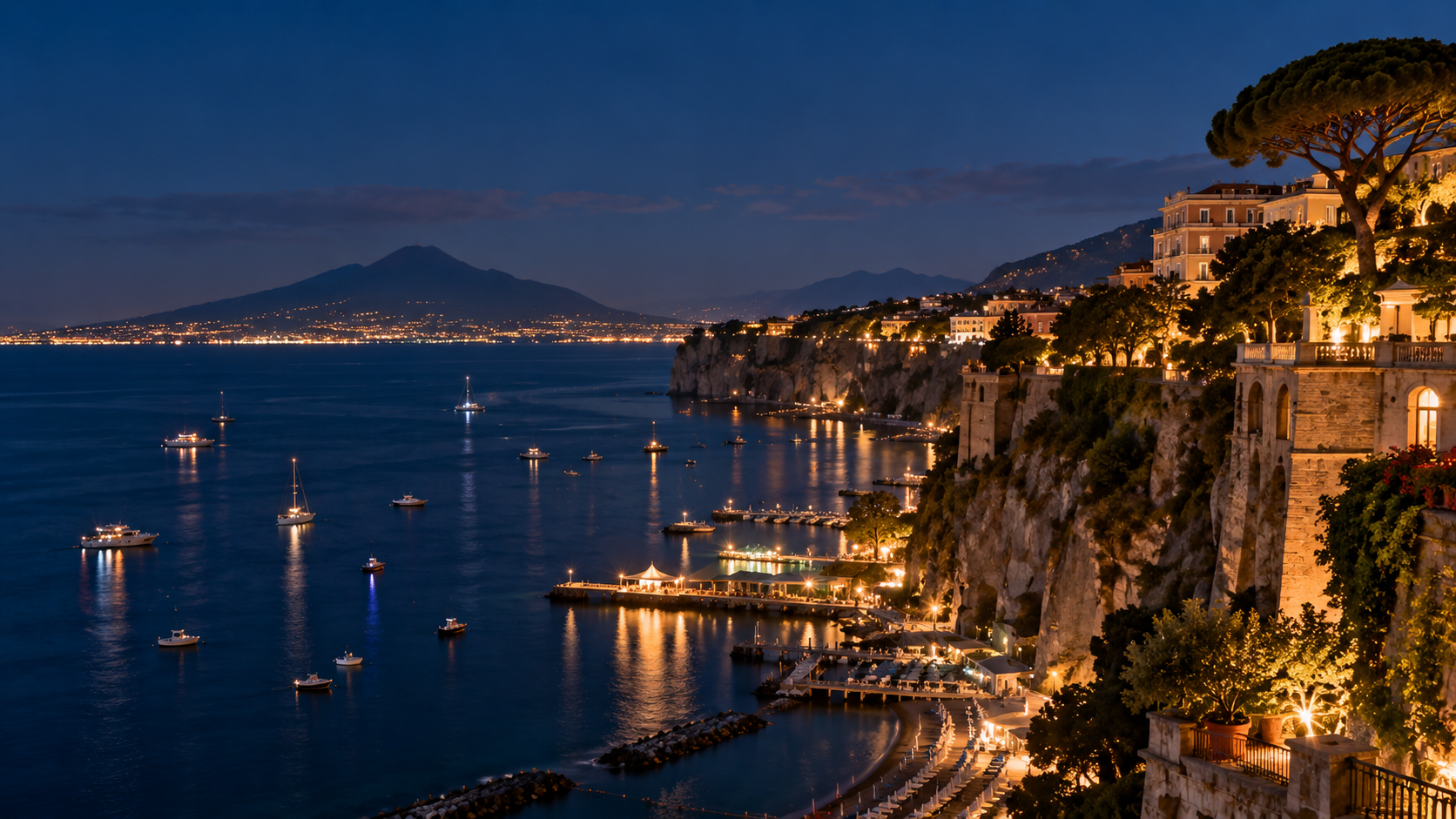
And yet Sorrento is always there, at the centre of the song. The cliffs above the sea, the gardens, the scent of citrus and the Bay of Naples are not simply a backdrop. They are part of the music.
Listen to It in Sorrento
There is something different about hearing Torna a Surriento when you are actually in Sorrento. Perhaps you have walked through its narrow streets during the afternoon, looked out over the Bay of Naples at sunset or passed gardens filled with lemon and orange trees.
Then the first notes begin, and suddenly the song makes perfect sense.
Because some music can take you somewhere.
And some music sounds as though it could only have been born there.